[The Wagner Chronicles] VI — Return to Eden
![[The Wagner Chronicles] VI — Return to Eden](https://media.sponsr.ru/project/5722/post/178462/image/486994/imagesprojects7225722ax0f8y39g8d0ca9d.webp?1787433700289)
The Liberation of Palmyra
After Wagner Group assault detachments liberated Syrian Palmyra in March 2016, government forces failed to resolve a significant part of the problems around the so-called “Palmyra pocket.” As a result, in December 2016, Palmyra and its surroundings were seized once again by Islamic State militants, and the desert front shifted back toward T-4 Air Base. Under these conditions, after redeploying to Russia, the Wagner Group fighters were sent back to Syria and began a new operation to liberate the Desert Bride.
Beginning in January 2017, Wagner PMC detachments launched an active offensive on a broad front, clearing dominant heights and key points along the Damascus - Palmyra highway. Once again, Russian volunteers and veterans of hot spots moved along the desert roads in order to tear Palmyra, finally and irrevocably, from the claws of the terrorist quasi-caliphate. That goal would be achieved on March 2, 2017, when the so-called “musicians” once again stepped within the bounds of the ancient city.
NB: All unmarked quotes in the text are taken from Kirill Romanovsky’s book Eight Years with Wagner (Moscow: AST; Leningrad Publishing House, 2024).
The Withdrawal
On March 27, 2016, Wagner Group units liberated the ancient city of Palmyra and its surroundings. At the time, the media said that the ancient city from the covers of history textbooks had been taken by Syrian army units. In reality, neither Russian nor Syrian regular troops took part in the first assault on Palmyra: every operation on the ground was carried out by Wagner fighters. Yet the “musicians” received neither glory nor honor for the feat they had accomplished. Since the unit was operating in the Syrian Arab Republic covertly, without public acknowledgment of its activity, only a few received awards for the Palmyra campaign.
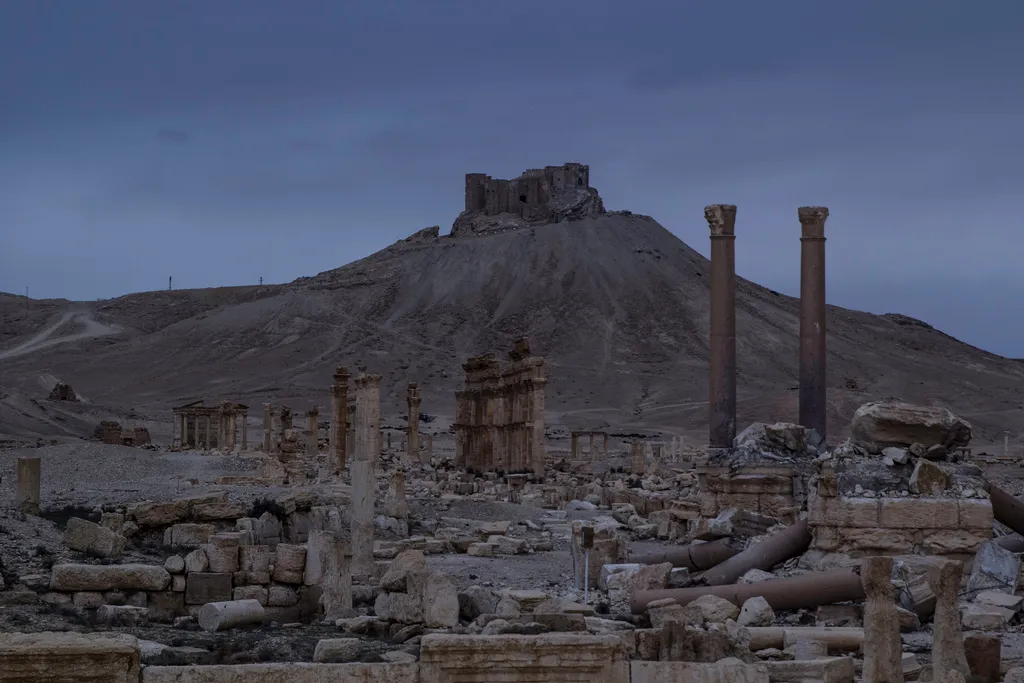
Soon Palmyra was handed over by the Wagner fighters to Syrian troops. Units of the Syrian Arab Army (SAA), detachments of the National Defense Forces (NDF), pro-Iranian militias, and representatives of the Russian Armed Forces, who trained and prepared Syrian soldiers, were deployed on the territories liberated from the militants. The fighters of Wagner Group, however, faced a different fate. After the operation, the volunteers received an order from the Russian Ministry of Defense: the unit was to be withdrawn to Russia immediately.
As war correspondent Kirill Romanovsky recalled, immediately after this order, Il-76 aircraft began flying to Syria in large numbers. At first, men returning to the Russian Federation were loaded onto them. Later, the Wagner detachments began to be pulled out from key positions and dominant heights around Palmyra: around three hundred men were placed on the deck and in the hold of a large landing ship which, on another run of the “Syrian Express,” had just delivered ammunition to the Russian grouping and was standing in the port of Latakia. The voyage lasted three weeks. During it, many wounded men from among the Wagner fighters developed severe complications, and the ship also lacked the food and water supplies they needed.
Kirill Romanovsky, war correspondent of the Federal News Agency:
I tell this story knowing that my days are numbered, and that I am unlikely to see it published. But I ask my friends, to whom I have left my archive, to publish it when the time comes, in order to help my comrades-in-arms and true Russian heroes, with whom I walked shoulder to shoulder for many years under enemy bullets. They had assault rifles and machine guns; I had a camera.
The Awl in the Sack
Despite the successful Wagner Group operation near Palmyra, several problems remained unresolved after the city was taken, above all because the Wagner units were soon withdrawn from Syria. The territory liberated from ISIS formed a salient extending from T-4 Air Base: one branch ran toward Palmyra, the other toward the al-Shaer gas field. The perimeter around the city was limited to three points:
- to the north, the abandoned base of the Syrian Arab Army’s 550th Brigade, looted by ISIS militants during their time in Palmyra;
- to the east, the Palmyra grain elevator, built to store the large reserves of grain needed by the city’s residents in the middle of the desert;
- to the south, the so-called “Gardens of Palmyra,” a large oasis cultivated for several thousand years by the residents of ancient Palmyra and Arab Tadmor.
All these positions lay relatively close to the city center, roughly 10-15 kilometers away. They made it possible to monitor the surroundings and prevent militant infiltration, but they did not create a full security zone around Palmyra. For this reason, the Islamic State repeatedly tried to attack the settlement in the summer of 2016. Repelling the terrorist group’s attacks required the use of Russian Aerospace Forces attack helicopters from T-4 Air Base.
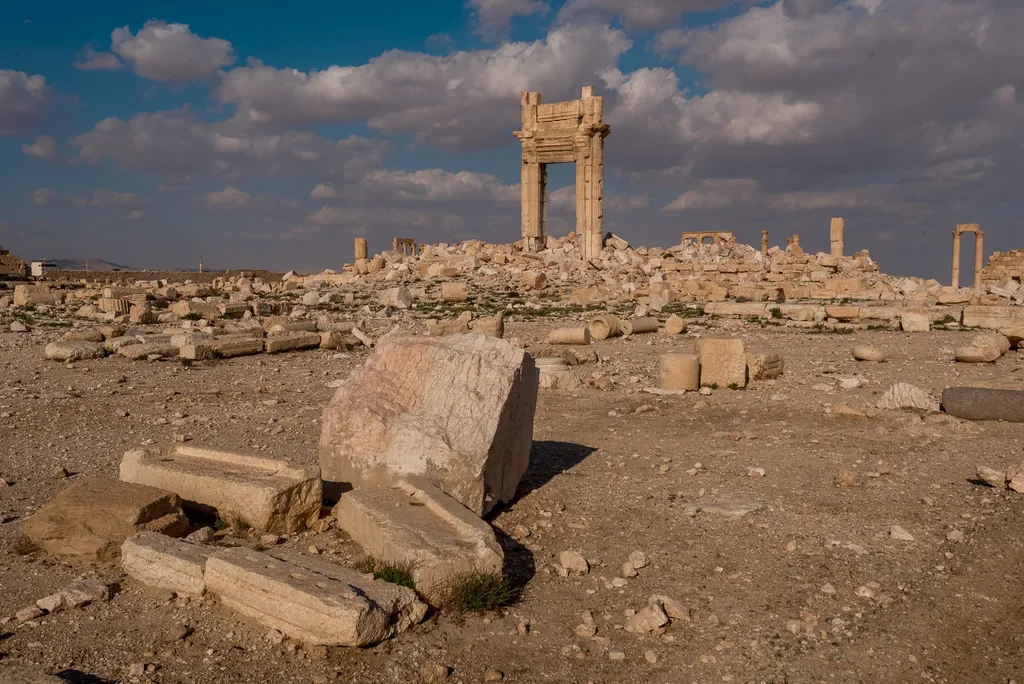
The Syrian command understood that the terrorist threat remained and attempted to advance east along the Palmyra - Deir ez-Zor highway. In June 2016, the SAA and pro-Iranian formations launched an attempt to storm the Arak gas field and the T-3 gas pumping station in the Syrian desert. The offensive failed, however, and pro-government forces were unable to expand the perimeter around the city either in the summer or in the autumn.
There was also the problem of the northeastern salient from T-4 toward the al-Shaer field. Over several months of low-intensity clashes, government troops and their allies failed to fully occupy the field and all the surrounding heights. The mountainous and hilly terrain helped ISIS militants preserve their forces and avoid detection from the air.
By December 2016, pro-government forces still controlled Palmyra and its immediate surroundings. Yet the position of the forces deployed there was indirectly complicated by events in another part of Syria. On November 5, 2016, the Syrian army began an offensive in Eastern Aleppo with the aim of fully liberating it from armed groups. The operation was strategic: if it succeeded, the militants would lose control of one of the country’s largest cities. It would also mean the collapse of their attempts, underway since 2012, to seize the administrative center of the governorate completely.
To liberate Aleppo, the most combat-capable units of the Syrian army were transferred to the front, even though the army was already in desperate need of fully manned units with high morale. Damascus’s allies were also redeployed to the city, including detachments of the Lebanese Hezbollah group. In addition, several Wagner assault groups were sent to Syria and also took part in the battles for Eastern Aleppo. The concentration of forces helped the operation succeed, but it also deprived the command of the ability to quickly redeploy troops in the event of an escalation elsewhere in the country. Palmyra was one such place.
The Second Fall
By the time the Aleppo operation began, the "Desert Bride" was defended mainly by National Defense Forces militia detachments recruited from local tribes. Their level of organization and training allowed them to serve at checkpoints and observation posts, but full participation in combat against ISIS was out of the question. Matters were no better with the pro-Iranian formations, the “Fatimids.” They too had organizational problems and, on their own, could not serve as reliable protection against ISIS attacks.
With Wagner Group fighters absent from Syria, the situation near Palmyra was held together only by the presence of Russian Armed Forces units in the town and by support from attack helicopters based at T-4 Air Base. By December 2016, however, Russian Aerospace Forces bombers and drones were also involved in the operation to liberate Eastern Aleppo and could not meet every request from the command of the Palmyra grouping. This made it harder to detect concentrations of ISIS detachments around the town and strike them from the air.
All the reasons listed above - Wagner Group’s withdrawal, the unresolved problems on the flanks of the “Palmyra pocket,” and the redeployment of key units to Aleppo - created a threatening situation around Tadmor and its surroundings. In the end, the Palmyra salient, together with the diversion of forces and assets to the Aleppo operation, created the preconditions for a new Islamic State strike against the city.
On December 8, 2016, reports emerged that ISIS militants had attempted an offensive against the Jazal oil field north of Palmyra, from the direction of Huwaysis and on the southern defensive flank, near Qasr al-Halabat. Toward evening, SAA units restored control over a number of positions in the area, but on the city’s northern lines the terrorists managed to hold part of the oil field and several points.
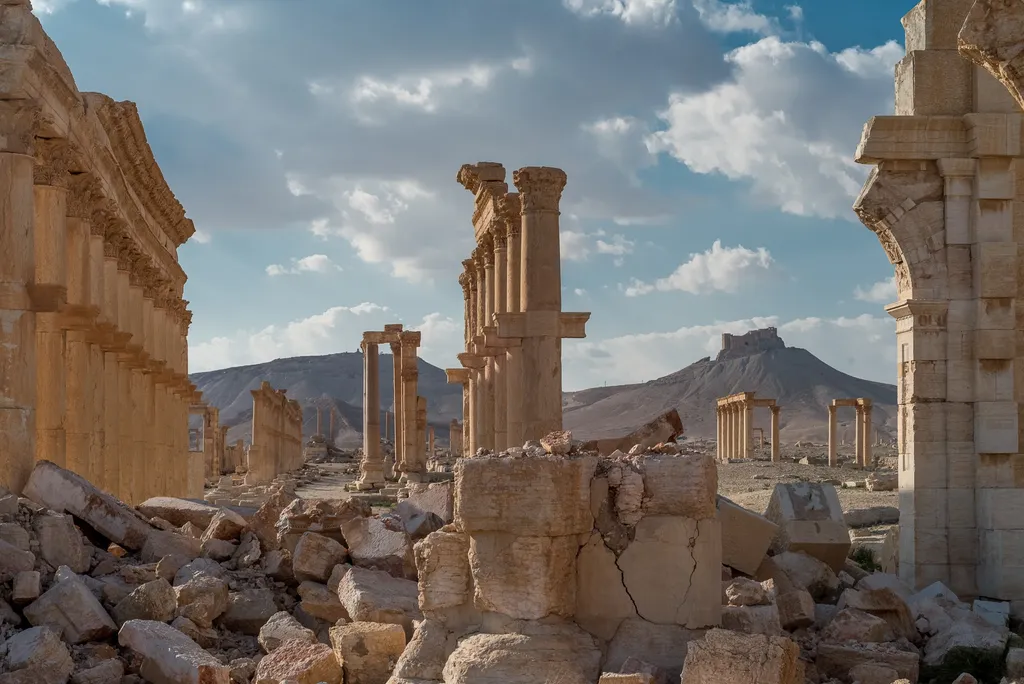
By the morning of December 9, ISIS forces attempted to entrench themselves in the Jazal oil field area in order to make a dash toward the city from there. Their attacks around Palmyra itself were less successful: Syrian infantry managed to repel ISIS “shahid-mobile” attacks, while SAA units on this sector of the front received active support from Russian Aerospace Forces and Syrian Air Force aircraft operating from T-4 Air Base.
On December 10-11, the situation around Palmyra became threatening for government forces. ISIS militants attacked the grain elevators east of the city and broke through SAA defenses on this sector of the front. At the same time, advancing in the east, the militants occupied key hills north of the city, from which they could observe what was happening inside Palmyra. Fighting was already taking place within the city limits, where pro-government forces faced well-armed militants from Raqqa and Deir ez-Zor, as well as ISIS mercenaries who had arrived from the Iraqi governorates of Anbar and Nineveh.
Kirill Romanovsky, war correspondent of the Federal News Agency:
On December 9, 2016, around 30 ISIS militants shot up a checkpoint on the western approaches to Palmyra and burst into the city. Syrian and Russian military personnel began hastily abandoning their positions. ISIS brought up about 100 reserve fighters. In the end, several thousand army soldiers shamefully fled Palmyra, abandoning tanks, armored vehicles, and artillery along the road, all of which subsequently fell to ISIS.
After intensive air strikes against the advancing ISIS militants, the Syrian army managed to restore the integrity of the front, and the line of contact again shifted back toward the grain elevator and the hills. On December 11, however, the terrorists still broke into the city, having first captured the Jabal Hayyan ridge near Palmyra and attacked the dominant height of Jabal al-Tar. After that, the militants began advancing on the Tiyas - Palmyra highway. IS’s key objective was the so-called Palmyra triangle, the intersection of the main roads at the western entrance to the city; by taking it, the terrorists would cut off supplies to the entire grouping of government troops.
Under these conditions, the Syrian army abandoned Palmyra, breaking through under fire toward T-4 Air Base. By December 12, IS militants controlled the city, the road triangle, and the settlement of Bayrat. An enormous quantity of Russian-made military equipment, along with weapons and ammunition, fell into militant hands: the entire arsenal prepared for the offensive from Palmyra toward besieged Deir ez-Zor. Later, when the Wagner Group assault detachments stormed Palmyra again, much of the "ghanimah", the trophies captured by the militants, would be used against the advancing assault units, above all the explosives that the militants skillfully employed in various improvised explosive devices.
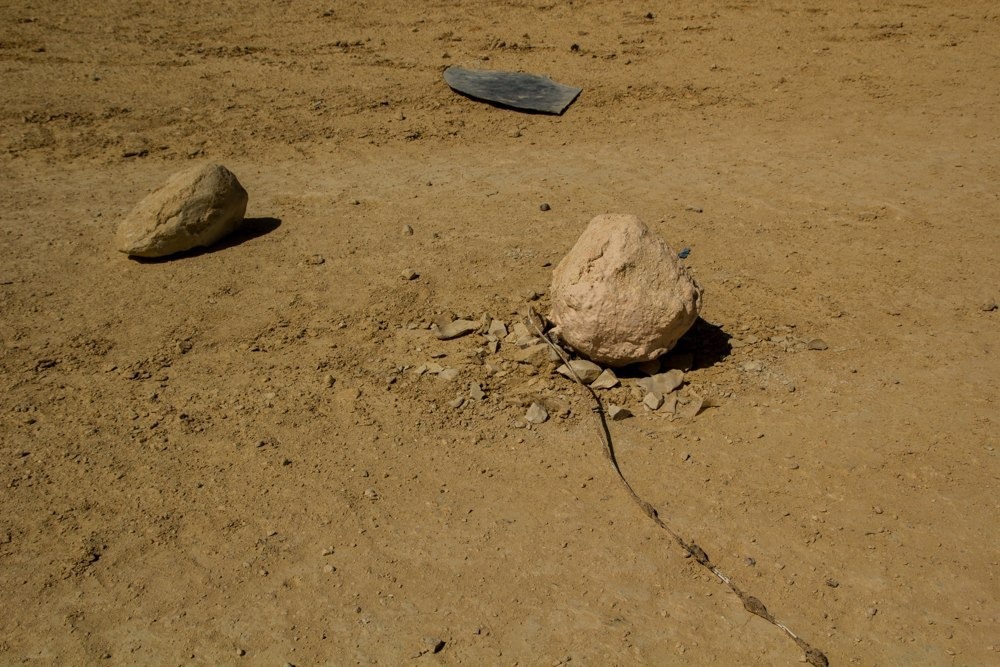
The most ingenious IED the militants had was a stone, the kind we found the last time. It had lacquered wires. And when wires like that are lacquered, they are like human hair. The “plus” and “minus” are ordinary. And these micro-switches, made from a can... well, not a food can, from sheet metal. You could barely see it. Just a little cobweb around the stone, spiral-shaped. Or it lay across the road, spray-painted the color of the asphalt. Even on foot, you could step on it. To say nothing of a vehicle passing over it, running onto it - and a land mine detonating from the side. And that was it... On top of that, the dushmans had small-batch production in the rear. They had entire mini-factories making all this. In that respect, of course, they were good inventors.
You should never underestimate the enemy. They have their own tough men, of course, and their own professionals. Experienced people were working there, apparently.
The Race to T-4
The Islamic State breakthrough northeast of Palmyra happened so quickly that not all troops managed to withdraw. ISIS propaganda consequently showed numerous videos of fleeing Syrian soldiers being shot by light infantry on motorcycles and pickups. On the positions abandoned by the army, the militants also gathered various trophies, including armored vehicles and artillery. It is worth noting that on December 11-13, most of the militants attacking Palmyra were busy looting in and around the city, so only a small part of the terrorist forces took part in pursuing the government troops retreating from Palmyra.
After the loss of Palmyra and the withdrawal of troops along the only road to the Jahar junction on December 11, Syrian troops were forced to continue retreating toward T-4 Air Base. The enemy actively pursued government forces, developing the offensive eastward along the Tiyas - Palmyra highway and along the Huwaysis - Jazal line, pushing Syrian troops to the southeast. By 15:00 on December 12, 2016, ISIS militants had taken the Jahar junction, after which the Syrians began falling back to the defensive positions around T-4 Air Base.
By the evening of December 12, fighting had begun on the near approaches to the air base, where attacks by enemy light infantry had to be repelled. Part of the field fortifications north of T-4, however, was occupied by militants without serious resistance, and the air base itself began coming under artillery fire corrected from the heights occupied to the north. At the same time, the enemy began a flanking maneuver south of Tiyas, aiming to encircle the troops defending the town. ISIS propaganda claimed in those days that the base would be taken within two days.
On December 13, 2016, the terrorists attacked from the north, using “shahid-mobiles” and the most trained “inghimasi” detachments. The militant grouping bypassing Tiyas opened fighting southwest of the air base, effectively cutting the road to al-Qaryatayn and creating a threat of encirclement for Syrian troops and the Russian contingent holding the line on the Homs - Tiyas highway. That same day, government units of the “Tiger Forces” were transferred to Eastern Homs, moving toward both Tiyas and al-Qaryatayn. Despite the militant attacks, the base continued to function: aircraft and helicopters took off from it to provide direct support to the troops.
On December 14, the enemy seized the road junction southwest of Tiyas and continued trying to cut the only highway leading to the air base. These strikes were repelled, as were militant attacks on the positions north of the air base. Moreover, ISIS was driven out of an abandoned battalion base and a height north of the town, from which artillery fire on T-4 had been corrected.
In the fighting, the ISIS lost several armored vehicles and several technicals. That same day, Lebanese Hezbollah forces moved toward Tiyas in Eastern Homs; more than 200 fighters arrived at the air base. Iran also began transferring reinforcements for Liwa Fatemiyoun, which had suffered significant losses during the defense of Palmyra. At the same time, the terrorists also tried to strengthen their positions by sending detachments along the al-Sukhnah - Palmyra highway.
Having failed to take the air base on the move, the ISIS shifted to attempts to bypass T-4 from the south, break through via Ash-Sharifah to the main road, and cut it, encircling the Syrian-Iranian-Russian grouping. On December 17, the main combat operations were taking place south of the air base, near the road junction. The Syrian defense around Ash-Sharifah held, and the pace of the ISIS advance fell sharply. Islamic State infantry approached the air base from the south, but could not overcome the line of fortifications, since the main forces were pinned down in the west by the battles for Ash-Sharifah and the junction. Both sides suffered significant losses in men and equipment.
On December 19, amid lower temperatures and snowfall that hampered both sides, the terrorists failed to achieve anything. The Syrians, meanwhile, took Ash-Sharifah, secured the road junction and a number of hills northeast of the air base. Militant attempts to advance toward Furqlus were also contained. The militant offensive was already moving more by inertia, but the ISIS command understood that stopping would soon mean losing the operational initiative, so the attacks continued.
In the end, on December 20, the militant offensive in the T-4 area stalled. Having contained the main threat from the south, government forces began pushing ISIS detachments back from the approaches to the air base, trying to seize the initiative. The terrorists withdrew from the junction and Ash-Sharifah with heavy losses.
During the fighting on December 17-19, the ISIS offensive on Tiyas was stopped, and the militants’ advance through the desert toward al-Qaryatayn and Mheen was also prevented. The acute phase of the conflict near Tiyas had passed. In the following days, the fighting took on a positional character: ISIS failed to achieve its operational objectives, and the battle was reduced to a struggle for strongpoints around the air base. The situation stabilized thanks to incoming reserves. Attacks on the base were repelled from all directions, the threat from the south was neutralized, control over the Homs - Tiyas highway was preserved, and ISIS activity near Furqlus was also contained.
Having lost the pace of the offensive and the ability to operate in an operational space free of Syrian troops, ISIS forces equivalent to a light mechanized brigade discovered that their striking power was not enough to break through the SAA defensive line. The militants had missed their chances to develop their success on December 13-15, when there had been a real risk of losing T-4.
The Wolf Hunt
By the end of 2016, Syrian and Russian military forces had managed, to some extent, to contain the operational crisis that had erupted on December 10-11, leading to the loss of Palmyra and the weakening of the front. Yet the situation was still very far from resolved. In effect, by the end of 2016, ISIS militants had managed to cancel out all the gains Wagner Group had made at the beginning of the year. After the offensive on Palmyra and the “race to T-4,” Islamic State forces broke through the front line, seized the ancient city once again, and pushed Syrian army units back by fifty kilometers.
To continue the counterterrorist operation against the Islamic State, Palmyra had to be brought back under control at any cost. That required solving several strategic problems. The key task in the Palmyra direction was to give the city sufficient flank protection. The coming offensive had to be planned in such a way as to prevent the threat of another militant breakthrough and a repeat of December 2016, while also preparing forces for a new thrust toward the ancient city.
A second important task in the Palmyra counteroffensive was to liberate the oil and gas fields northwest of the city. Beyond the strategic advantage this would bring, control over the fields would deprive ISIS terrorists of their main source of income from oil and gas smuggling. Palmyra’s gas facilities, moreover, were among the most important sites in Syria’s entire energy infrastructure.
The central question nevertheless remained: who would advance on Palmyra, and with what forces? According to the media at the time, the 5th Volunteer Assault Corps of the Syrian Arab Army and “Russian military advisers,” who were “training soldiers and advising the Syrian general staff,” were urgently redeployed to the Tiyas area. In reality, that phrase once again concealed Wagner Group fighters. As we now know, in December 2016, after the loss of Palmyra, the Russian command decided to redeploy the Wagner fighters to the Syrian Arab Republic for a large-scale counteroffensive and the recovery of lost positions.
Throughout the first half of January 2017, Wagner fighters underwent combat coordination, first at the unit’s base in Molkino in Krasnodar Krai, and then in Syria, at T-4 Air Base in Homs Governorate - the staging ground for the offensive on Palmyra already familiar to the “musicians.” During this period, fighting around the air base and the settlement of Ash-Sharifah was mostly positional. At the same time, a combined grouping of troops numbering up to seven thousand men was assembled at T-4.
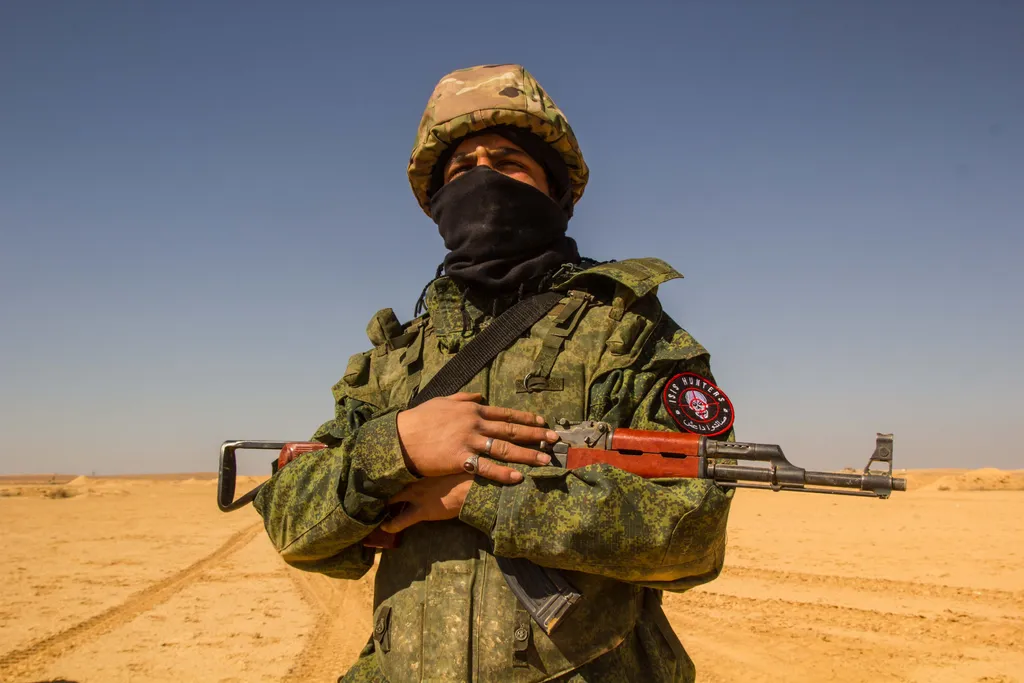
It was then that Wagner Group fighters took charge of a detachment of Syrian militiamen, whom they had to arm and train themselves for operations near Palmyra. According to the unit’s own legend, the Syrians who joined this detachment, named the “ISIS Hunters” (“Sayyadu Daish”), came from families that had suffered at the hands of Islamic State militants. They became the Wagner Group's first apprentices and the first fighters to learn from the Russian volunteers a previously unknown “science of victory.”
From the official Twitter page of the “ISIS Hunters”:
“Their eyes are full of anger and pain when they see their homeland in ruins...”
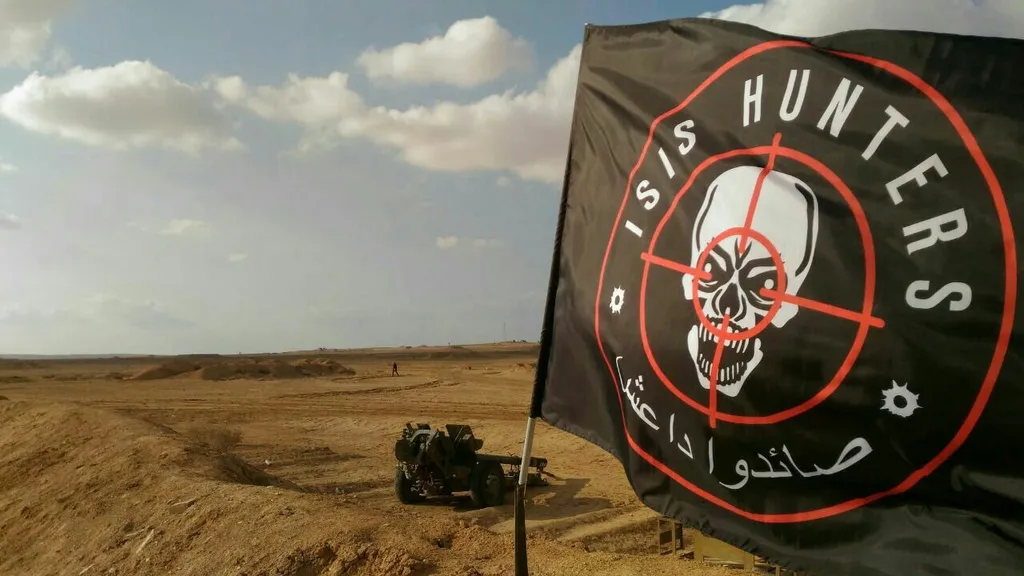
Along with supplying the Syrian fighters with equipment and weapons, and giving them full training, Wagner Group also created a unique insignia for the “ISIS Hunters”: a round patch with a skull in the crosshairs of a sight. This served several purposes at once. Besides making it possible to distinguish their own fighters from Syrian army soldiers, the “ISIS Hunters” emblem guaranteed that no one would ever be able to appropriate the victories and achievements won by the Wagner Group and the men under their care. In effect, the “ISIS Hunters” became the Wagner Group’s first media project, so recognizable that the "ISIS Hunters" patch would later become the first canonical identifying symbol of the “Orchestra” itself.
Alongside the Wagner fighters and the “ISIS Hunters” unit they had created, the grouping included Syrian and pro-Iranian militiamen. Among the Syrian units, one could point to the 5th Assault Corps, supported by National Defense Forces militia, as well as the armored “Shahin Group” from the “Tiger Forces” special unit. Yet even then everyone understood who would play the leading role in the coming return of Palmyra.
The Broad Front
On January 16, 2017, the counteroffensive near Palmyra began in earnest. During the night of January 16, Wagner Group fighters, together with attached forces from the “Hunters,” took control of the Jahar junction east of Tiyas, as well as the Shekhar checkpoint on the highway leading toward Palmyra. From that moment, the fighting around the air base began gradually shifting along the road. At the same time, Wagner units started advancing through the Jabal Tiyas mountain massif, where entrenched Islamic State militants were firing on ground and air targets.
We entered Syria, received our assignment there, and moved out to the site. First the guys came for reconnaissance. I did not go with them, so I cannot give my own impressions of the reconnaissance. The task was this: there was a narrow isthmus, or rather two narrow isthmuses. Along one narrow isthmus, the “Fourth” went to take up the lines. We were moving from the right flank. At that point I had not studied the maps or the enemy disposition.
At first we had to tinker with things a bit. The Syrians told us that they and their sappers had cleared their own defensive line for our passage. But I do not trust their sapper skills. Since I had spent many years in the point patrol, I went first in the lead group and removed another seven mines. The whole detachment was supposed to follow me; behind me, the guys removed several more obstacles and another seven mines. All of it happened in complete darkness, practically by touch. I did not even use night vision, because my eyesight had deteriorated after a concussion, and both night vision and thermal imagers blind me badly. I try to rely only on my own eyes: I see fairly well in the dark and sense many things. We cleared the line instead of the Syrians and moved on.
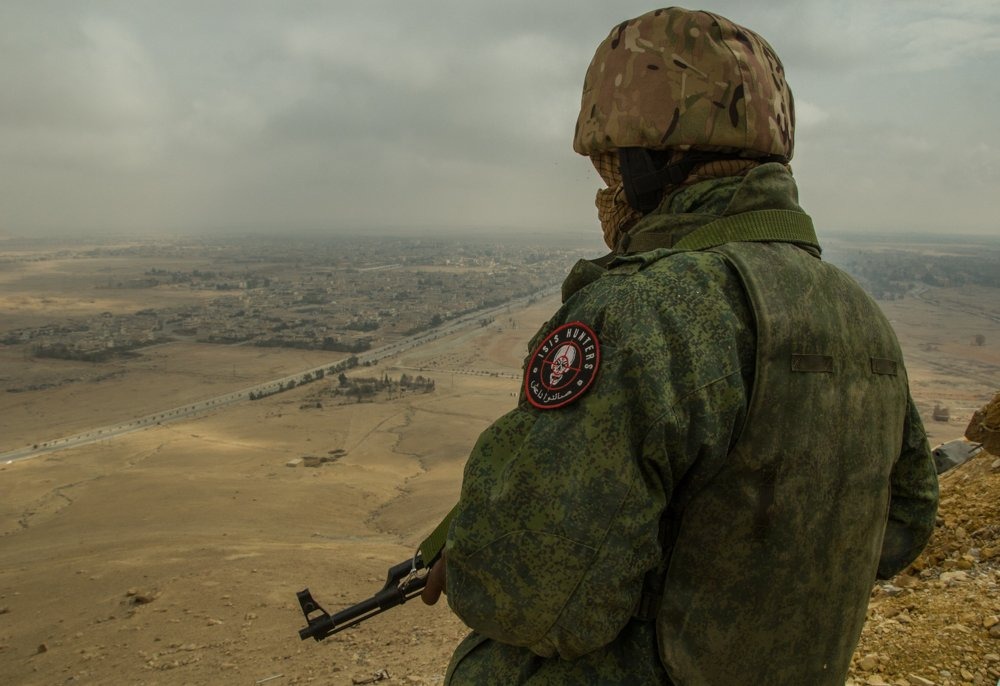
Realizing that the “pro-government forces,” as the media called them, were planning to take Palmyra back from the militants, the ISIS leadership decided to stage a demonstrative act of destruction against the monuments of antiquity. On January 20, Islamic State propagandists distributed photos and videos showing the destruction of ancient monuments: an IED blast destroyed part of the ancient Roman amphitheater and the architectural complex of the Tetrapylon. The terrorists also declared that they would destroy all of Palmyra’s ancient buildings if the Syrian army advanced to the city walls.
The militants’ threats, however, could not change the course of events. As early as January 21, Wagner assault units broke through the Islamic State defensive line in the southeast of the governorate, liberating a significant area around T-4 Air Base. After a short battle with the terrorists, Wagner forces also took control of the al-Maghr area east of the Jabal Tiyas mountain massif and began gradually advancing deeper into enemy territory. As a result of this advance, by January 23 the Wagner Group forces had broken through the militants’ defensive line, occupied Height 725, and liberated a significant area around T-4 Air Base and the mountain ridge.
In response, Islamic State militants attempted to strike on January 26 near the settlements of Jubb al-Jarrah and al-Masudiyah, but the attempt failed. Working on the counter-move, however, the Wagner fighters restored control by January 30 over the old abandoned air defense base north of Jabal Tiyas and the Bayt Jarbu Azu area.
My section performed rather harshly and heroically: nobody backed down, I was in the front ranks, keeping an eye on everyone. We entered the positions, took them, and dug in. At that moment “Angry” was with me; he was a platoon commander. With us were “Rus” and “Tyson,” men thanks to whom, above all, all the attacks during that deployment took place.
“Tourist,” “Veter,” “Tor,” “Rus,” “Tyson” - men who, like me, have no brakes. If the enemy is in front of you, they all know this: if you start retreating, you are already potentially “Cargo 200,” but if you keep going forward, you have a chance both to survive and to complete the task. I do not know, maybe I forced that psychology on them?
We took our strongpoint, cleared it, dug in, and that seemed too little to me, because all the other platoons had only just begun storming their own fortifications. On my own, as if without orders from above, I took all the guys - two sections. One section I left there, and two sections I took with me.
During the assault on that height, after we had cleared it and moved forward to inspect it, my best friend, “Angry,” was hit by a sniper. He came out onto the height that the reconnaissance platoon was supposed to storm; they were pinned down there under heavy fire and could not climb to the top. In the end, “Angry” received a gunshot wound to the head.
I want to give a separate thanks to the Company for treating him for two years at Sogaz. He survived clinical death; they got him out, they saved him. The treatment cost an absolutely enormous amount of money - 600,000 a month. After that they sent him home, because the doctors threw up their hands and said there were basically no options left. The company arranged a pension for him of 100,000 rubles, and they also managed to secure a state pension for him. So in principle, on 120,000, you can live fairly decently, even as a disabled man. But it so happened that his wife no longer wanted to put up with him, and they divorced. He now lives with his mother. I went to visit him this year.
By January 31, the Jabal Tiyas ridge had been completely cleared of IS, and Wagner forces together with the “ISIS Hunters” fighters under their care had secured themselves near the Jahar junction. According to reports from the Syrian Ministry of Defense, the tactic of advancing on a broad front brought its first successes: as the official channels of the Syrian military department reported at the time, “government troops” had advanced fifteen kilometers from T-4 Air Base and created a bridgehead for the return to Palmyra.
It was during the storming of the Jabal Tiyas heights, incidentally, that a new man in the Wagner Group first made himself known: 35-year-old reserve captain Anton Yelizarov, who received the call sign “Lotos” in the ranks of Wagner Group and was appointed commander of an assault unit. By that time Captain Yelizarov, the future Hero of Russia, had been involved in a high-profile housing privatization case, sentenced to three years’ probation, and evicted from his apartment. His arrival in Wagner Group in January 2017 became the beginning of a new and much larger path in life for “Lotos.”
We made our way to “Lotos” under terrible shelling. A ZU gun was firing. While we were running, we lost two men killed in action. We dragged the guys out, evacuated them. We reached “Lotos”; “Zombie” had just linked up with him at that moment. We discussed the details of what we would do next. And then we went on the offensive. In short, we took their height too.
After that, together, we chased a small detachment of dushmans. There were two or three militants retreating; we chased them for about five kilometers, just flat-out ran after them. They fired back, and we kept running after them up to the line. There was an enormous riverbed there, and when they reached it, our detachment commander was already shouting to us: “Stop! We go as far as this line and no farther. You can chase them like this for many more kilometers.”
In short, the distance was fairly large, about 600-700 meters; we simply could not hit them. That, let us say, was the battle when, for me, “Lotos” showed himself quite well.
At that moment he was new to the detachment and maybe did not know the men, maybe felt somehow uncertain. But apparently my actions gave him confidence. Later, in subsequent operations, he was already properly commanding his platoon. You could say that “Lotos” and I competed over who would take more heights, and so on. Simply for the result.
The Approach to Hayyan
Next important task was to reach the Palmyra gas fields, which were controlled by ISIS militants. The assault units’ key objective was the liberation of the Hayyan Petroleum Company gas complex, located just beyond the road to Palmyra. The oil and gas complex had been completely disabled after the militants blew it up. Beyond the strategic advantage, control over Hayyan would make it possible to restore and stabilize the power supply of Central Syria, which years of war had effectively destroyed.
On February 2, Wagner Group fighters reached the strategic Jahar junction, which led directly to the Hayyan plant, and began storming the gas fields. The day before, the volunteers had taken the strategic height of Qasr al-Hayr, destroyed a detachment of several dozen ISIS militants, and advanced southeast of T-4.
After the Wagner Group secured themselves in the Jahar area, Syrian army forces tried to storm the Hayyan plant on their own, without Wagner support. The difficulties around Hayyan, however, were compounded by a developed Islamic State fortified area covering the approaches to the complex. In the end, the first attempt to take the gas-processing complex failed completely. Although Syrian Arab Army fighters entered the complex on February 3, by February 6 they had to fall back to the Jahar junction after heavy fighting for the fortified area and losses from ISIS “shahid-mobile” attacks. The task of taking Hayyan once again fell to Wagner fighters.
We knew we were going to take the plant. But before the plant, we had to deal with a fairly strong dushman fortified area on the approaches. We went there during the day for reconnaissance. We went with the commander of the third platoon, “Morgan,” and his men. At that time I took the most reliable men from my own section and Morgan’s platoon. Whatever anyone says about “Morgan,” he is an instructor, not a combat officer. In critical situations he could not command a platoon well enough to keep people from drifting apart.
Also, after we had walked through, our people launched a quadcopter and checked the dushmans’ positions. I tried to convince the command that it would be enough to bring up tanks and shoot up those points from a kilometer away. If there had been no tanks, we had SPG recoilless guns and automatic grenade launchers with us, and it would also have been enough simply to fire those positions up.
On February 6, the Wagner forces established control over the ad-Dawah farms in the western part of the agricultural area between Hayyan and the Palmyra triangle. On February 7, the Wagner fighters took four key heights between the complex and the al-Maghr area, but full control over the oil and gas zone was still a long way off. IS militants offered fierce resistance while simultaneously blowing up gas wells.
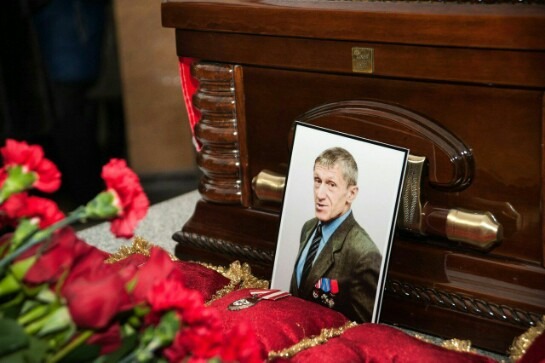
On February 10, several assault groups moved toward the fortified area near Hayyan to conduct reconnaissance in force. In this clash, an extraordinary Wagner fighter was killed: Viktor Blinov, call sign “Berserk,” a veteran of the Alpha special unit. According to eyewitnesses, the elderly Alpha veteran drew the IS machine gunner’s fire onto himself at the cost of his life, allowing other fighters of the detachment to eliminate him.
We reached the line and ran straight into the dushmans’ defense. They started pouring machine-gun fire on us from three points. But we did not stop; we kept going... We crossed a line where you could take cover and regroup. I looked at my men to check who was left, and at that moment a dushman machine gun wounded one guy in the lung. The guys were helping him, and, following my direction, everyone tried to silence that machine gunner. He was about a hundred meters away, firing at us in the open.
“Rus” and “Kalach” came in from the left, “Yashchur” was on the right side, I was in the center, in short, standing with Vadik. And at that moment we got stuck, and no one could move any farther. We were firing, but no one could hit that machine gunner. For three minutes we poured fire on him, and no one hit him. Then old man “Berserk” came out from behind me and said:
“Let me try.”
Well, I simply did not think about what exactly he was going to try. I said:
“Go ahead, try.”
He took a grenade and went for the machine gunner - full height, out in the open, straight at him. He probably did not make it thirty meters before the machine gunner cut him down. But by going out there, “Berserk” drew the dushman’s attention onto himself, and in that moment the machine gunner could be suppressed: “Rus” cut him down from the left flank, also with a machine gun.
I ordered the guys to drag old man “Berserk” away. A grenade was still in his hand, and the pin had already been pulled. He was dead, and the unexploded grenade remained in his stiffened hand.
The first battles around Hayyan showed that liberating the entire gas-processing complex would require significant forces from both the Wagner Group and the “Hunters.”
To turn the situation around near Hayyan, on February 14 assault troops drove ISIS terrorists out of Bayrat, managed to secure themselves in the area, and took important heights around Hayyan. An Islamic State counterattack near Bayrat on February 16 failed: several dozen terrorists were eliminated in fierce fighting. Taking advantage of the situation, a Wagner detachment advanced three kilometers deeper into the desert, liberating several settlements east of Bayrat from the terrorists, as well as areas in the Jabal al-Tar and Jabal Hayyal mountain massifs, and moving another kilometer and a half closer to Palmyra.
The efforts of the Russian volunteers did not go without result. On February 22, after clearing the terrain around the heights, Wagner forward detachments and the “ISIS Hunters” unit established control over the Hayyan Petroleum Company gas plant and the surrounding hills. Characteristically, before withdrawing, Islamic State militants set fire to nine of the twelve wells at the gas treatment and pumping station and blew up the station’s key infrastructure nodes, rendering the plant completely unusable.
“We Won’t Be Taking It Back a Third Time!”
By the end of February, Wagner Group fighters had significantly shortened the distance between Palmyra and their own positions, moving up to the approaches to the Palmyra triangle. No more than ten kilometers separated the Syrian army from the western outskirts of Palmyra, five of them to the road junction. If the pace of the offensive held, the volunteers had every chance of quickly taking the dominant heights needed to begin the assault on Palmyra.
Before the ancient city could be taken, however, several tasks had to be solved. Throughout February 2017, the Wagner fighters methodically cleared the area west of Palmyra, between T-4 Air Base and the triangle junction. In these sectors, new clashes with ISIS terrorists kept flaring up as the militants tried to push Wagner Group units away from Palmyra.
Near Palmyra in 2017, we were holding one position. Our guys had gone forward, and we were covering the rear for our units. There were two hills: our tent was down below, and on two hillocks, one on each side, there were two observation posts. It was night. My comrade and I were standing in a former dushman improvised caponier - a big one, built entirely out of stones - and watching to make sure the dushmans did not come. We were watching and watching, and suddenly my comrade said:
“Look through the thermal! What is that?”
It was pitch black. No moon, nothing. You could barely see the road. I look through the thermal, and there, right on the road, some kind of tiger is standing. Well, an enormous cat with a tail about a meter and a half long. It stands there, then starts coming toward us. I have no idea where it came from. I had not even thought there were cats like that in Syria. I do not know what it is called; it was just huge. And it was so quiet... No wind, nothing. We keep watching, and then, suddenly, that tiger disappears from the screen.
I report to the commander:
“There is a huge cat wandering around here. If anything happens, can we shoot?”
He says:
“Well, if it jumps you, shoot!”
I chambered a round and stood there, looking for it. It is not there, not there... And then my comrade leans out and shows me: it is sitting under the caponier. Like a house cat. And looking straight at us. You could only see it through the thermal. And I had no idea what to do with it. It felt wrong to kill it.
It looked us over and went down toward the tent. I tell the guys over the radio:
“Stay in the tent. Do not stick your heads out.”
And it went down to the tent, walked around, looked for something. Maybe it was looking for food. The dushmans had left a lot of things and food behind at that spot.
The guys go:
“Well? Has it left?”
I say:
“No, it is near the tent. I can see it through the thermal.”
The guys later said they could not hear it near the tent at all. It walked around for a while and left.
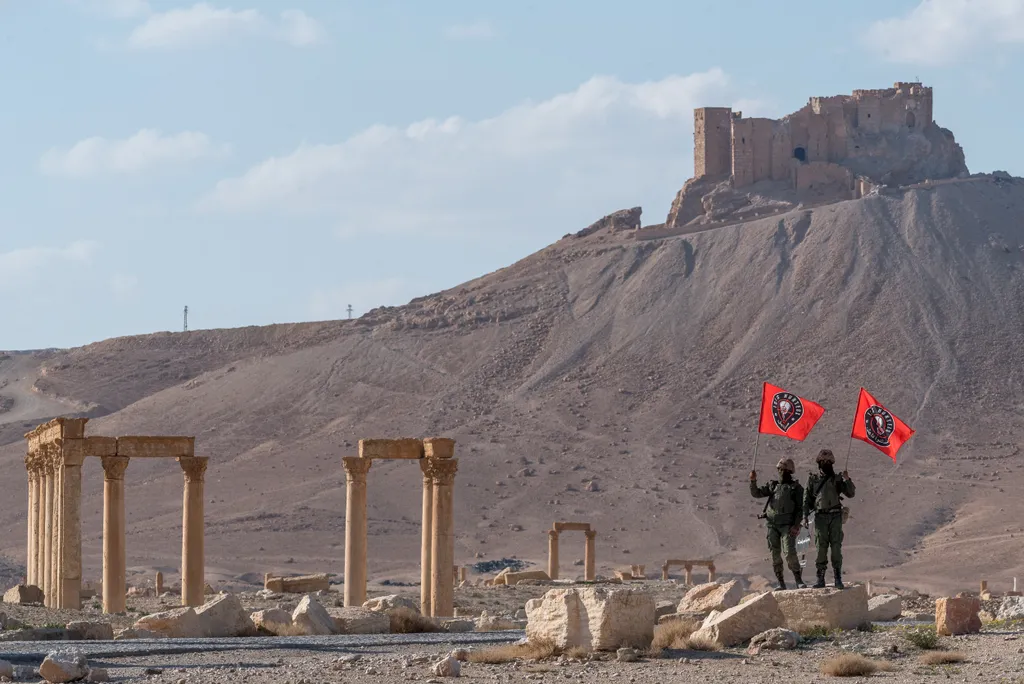
The main success of the principal preparatory stage of the Palmyra assault, however, was the storming of Height 939 in the Jabal Hayyan mountain area southeast of the city. It was carried out by Wagner’s 1st Assault Detachment under Alexander Kuznetsov, call sign “Ratibor.” By the evening of February 26, the “Ratibor” forces had taken the strategically important height, and in the battles that followed around 939 the militants suffered significant losses in manpower and equipment.
Yevgeny Prigozhin, March 2, 2023:
The first man to enter Palmyra was “Ratibor,” commander of the 1st Assault Detachment. I remember his words well. He turned to an official and said:
“If you f**k up Palmyra again, we definitely won’t be taking it back a third time.”
“Ratibor” led his assault detachment for several kilometers across minefields toward Height 939, that very famous height which became the key to the first Palmyra.
The height was on a completely open slope, and the guys climbed toward it with absolutely no cover from enemy machine guns. By noon “Ratibor” had reached it and moved left along the ridge until, by nightfall, he had taken all the main heights.
Despite the harsh conditions of working under IS machine-gun fire, the capture of 939 meant that Wagner fighters gained full control over the triangle road junction and could proceed directly to the assault on Palmyra. At dawn on March 1, after a powerful artillery preparation around the triangle, “Ratibor’s” fighters began fighting near the northeastern end of the Taniyat al-Ghazu ridge. Throughout the day, the triangle was attacked from both sides of the front. Wagner Group artillery fired mortars and heavy guns, while the militants, who also had reserve artillery brought up to Palmyra from the direction of Tadmor Airport, tried to halt the Wagner’s advance.
From the GREY ZONE Telegram channel:
The second assault on the city that had f**king worn everyone out began precisely with the deputy political officer’s fiery speech.
“All right, guys, spread out in a skirmish line and move!”
“What, like in ’41?”
“No chatter!”
By midday on March 1, after the enemy groups were split apart by the capture of Height 939, Wagner Group’s 1st Assault Detachment occupied the dominant heights of the Jabal al-Tar ridge and gained fire control over the entire western outskirts of Palmyra. To preserve the pace of the offensive, Wagner units moved to the power substation south of Palmyra, where they blocked the approach of ISIS reinforcements from nearby settlements that held significant terrorist resources.
All this made it possible, on the night of March 1-2, to conduct the first operation to establish control over the Palmyra valley. Under cover of darkness, Wagner Group fighters, accompanied by “ISIS Hunters” fighters and war correspondent Kirill Romanovsky, took the Palmyra Сitadel - the medieval Fakhr al-Din Castle, rising above the entire Palmyra valley - in a short and fierce assault. Having occupied the citadel and the nearby heights, the Russian volunteers effectively gained fire control over the entire valley of the ancient city.
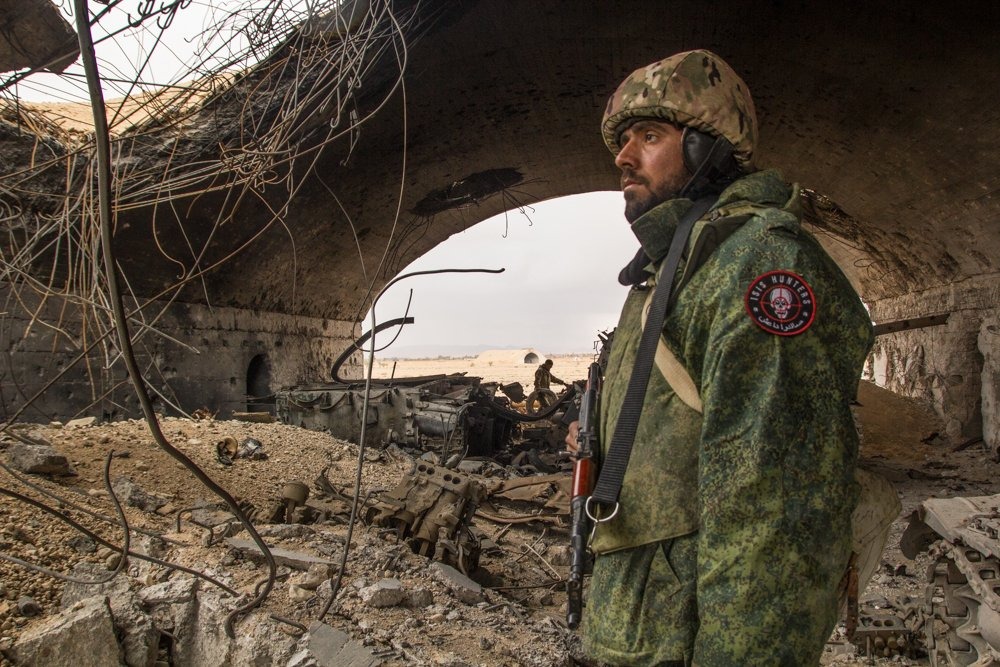
The next day, March 2, the assault on Palmyra continued. While the Syrian army gathered on the approaches to the city from the south, west, and northwest, Wagner fighters made another dash toward key ISIS positions in the area of Palmyra Airport. The main forces of ISIS artillery were concentrated on the territory of the airfield; in the event of an assault on the city, they could have held back the advancing units. A significant grouping of terrorist forces was also located on the airfield grounds, and the building itself was a well-fortified bridgehead. By taking the area, the Wagner fighters effectively deprived the militants of any possibility of counterattack or fire support.
We were going to Palmyra with the 1st Detachment. The 1st Detachment went through Height 939. We climbed up together, realized the equipment could not be brought through, and led all the equipment around 939. In one day. All the fire assets there... In effect, in one day we made such a detour that “Ratibor” himself, commander of the 1st Detachment, told us we were great.
And we moved out toward Palmyra with a BMP-1, first to the substation, then from the substation to the school. From the school we went through the gardens to the airport. A fight started there in the evening, on the edge. There were a couple of incoming rounds. We broke through that entire route, went through the whole thing, and cleared everything along the road. “Ratibor” was pleased. Probably not a single detachment commander ever said anything bad about my group. We worked with everyone, and no one ever said anything bad, because the guys gave everything they had. Everyone’s feet were rubbed raw, right down to blood. The distances were long.
By evening, the ISIS defense had been broken, and the terrorists had no choice but to withdraw deeper into the Syrian desert. Realizing that the situation was taking a threatening turn, they began hastily pulling their detachments out of Palmyra. Some of the terrorists, however, did not manage to get far: the Russian Aerospace Forces destroyed a large column of militants fleeing east from Palmyra along the highway toward al-Sukhnah.
From the GREY ZONE Telegram channel:
The fire was not dense. Apparently, the dushmans sensed the approaching f**kery waiting for them. Then it started. The situation was exactly the same, only no one shouted “hurrah!”, though it would have been appropriate. The city was silent; the remnants of the dushmans could be seen on technicals along the horizon. They were clearing out.
“Well then, to Palmyra, boys. Let's settle in.”
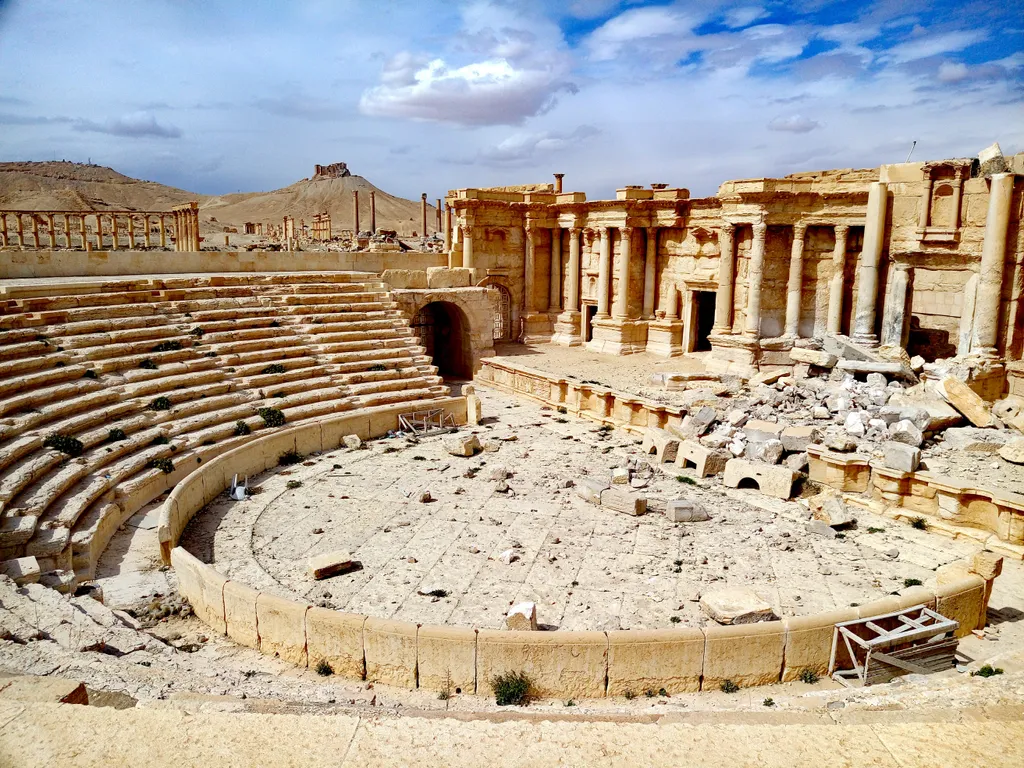
Contrary to all media statements, the Syrian army did not take part either in the fighting or in the assault on Palmyra itself. As Yevgeny Prigozhin later recalled, Syrian army fighters entered the city only after the Wagner forces had knocked ISIS detachments out of it by taking Fakhr al-Din Castle and Tadmor Airport.
Yevgeny Prigozhin, March 2, 2023:
Syrian troops refused to support us during this assault. In principle, the Syrian army rarely fought; usually it moved in herds behind us after the job had already been done. That is what happened in Palmyra too. After we took the power station and Palmyra Airport, I reported this to our command. An order was then given for the Syrian troops to move out, and they entered the city by the southern road behind the mountain ridge.
The Turning Point
On the evening of March 2, Russian President Vladimir Putin was informed that Palmyra was once again under control. Fighting around the city nevertheless continued for several more days. The front had to be straightened and stabilized, and ISIS militants had to be denied the opportunity to counterattack from deep in the desert.
The final liberation of Palmyra by Wagner Group marked a turning point in the entire Syrian operation against the forces of the Islamic State. De facto, the capture of Palmyra and the attack on the air base at Tiyas became the last major ISIS offensive operations of the Syrian civil war. Having taken Palmyra, the militant command expected to develop its success by pursuing the retreating troops, taking Tiyas on the move, and advancing as far west as possible in order to complicate the position of Syrian troops in Eastern Homs and al-Qaryatayn. That did not happen. Thanks to the timely return of Wagner Group detachments to Syria, the threat to the Syrian government was eliminated in the shortest possible time, and control over the lost city and its surroundings was restored.
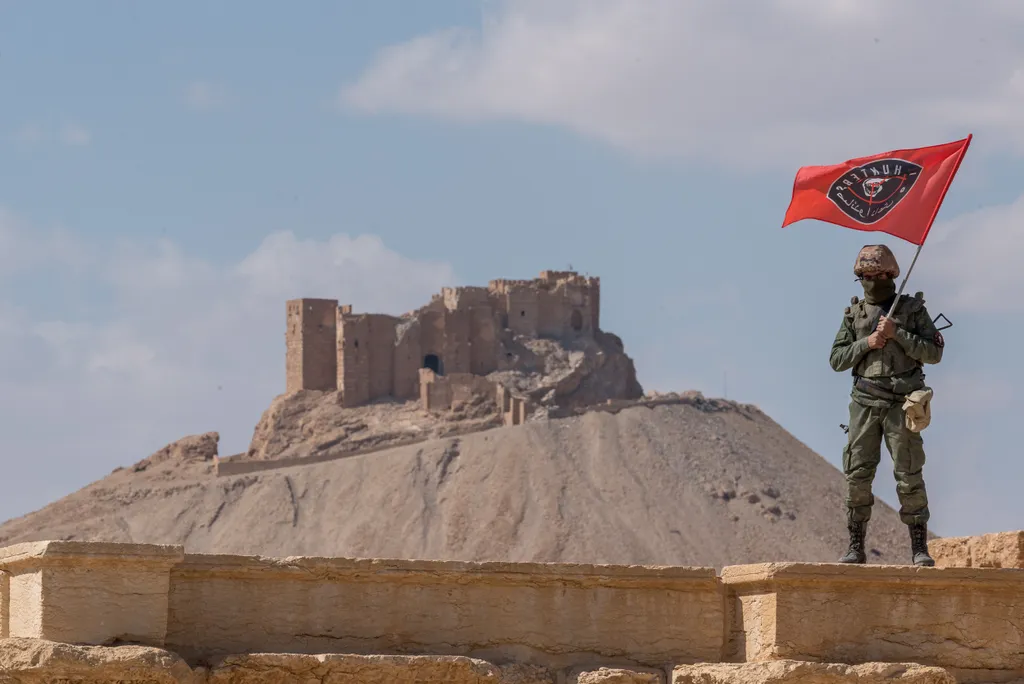
In the period that followed, the Islamic State would face a chain of military catastrophes in Eastern Homs and Deir ez-Zor. The successful Wagner Group offensive, the clearing of dominant heights and artillery-dominating positions, and the beginning of the liberation of the oil and gas fields made it possible not only to drive the terrorists out of Palmyra once again, but also to create the preconditions for the military defeat of the Islamic State in Syria. A new stage of the war was beginning, and it was marked above all by the return of Palmyra.
There are sad moments, and then there are these life moments... Memorable ones. For example, when we captured a dushman fortified area. We were the first to jump in there, because it was better for the others not to go: there was a minefield in front of the strongpoint. We went in with our section and spread out. The dushmans had only just cleared out, and there was a pot standing there. We were terribly hungry, and they had boiled potatoes in their skins, fish. Still warm.
We walked around the strongpoint; everything seemed clean, they had not had time to mine it. And right there where they had been sitting, we lit a fire, put on a kettle, warmed up the potatoes. We sat in the places where they had sat and found their jam. That is what I remember: date jam. Very tasty. It was not even jam, more like pastille, something pressed. There were no shops available there, so for us it was unexpected and delicious.
At the end of the meal I even exclaimed:
“Thank you, comrades from ISIS! Very tasty jam!”
Everyone laughed...
To be continued...
