[The Wagner Chronicles] II — Baptism by Fire
![[The Wagner Chronicles] II — Baptism by Fire](https://media.sponsr.ru/project/5722/post/157380/image/434057/imagesprojects72257222pjbzs39aeb15ba7.webp?1780131405976)
Throughout the summer of 2014, the air harbor of the LPR capital was occupied by the forces of the Armed Forces of Ukraine, which planned to use the airport as a key bridgehead for an offensive against Luhansk. Yet the Ukrainian command’s plans for occupation and bloody reprisals against all dissenters on the territory of the LPR were not destined to come to pass. Having driven the enemy back from the outskirts of Luhansk and cleared the airport district, the defenders of Donbass returned peace and hope for tomorrow to the lands of People's Republic.
It was in this battle that Russian volunteers from a small battalion tactical group under the command of Dmitry Utkin first showed themselves on a broad battlefield. Soon the whole world would come to know both the commander’s codename and the name of the group — The Wagner Group. Having arrived in Luhansk some time after its formation, the fighters of Wagner Group, numbering only a little more than forty men, were able to turn the course of events, throwing the enemy back from Luhansk and, on their own, taking the key Ukrainian bridgehead.
NB: All unmarked quotes in the text are taken from Kirill Romanovsky’s book Eight Years with Wagner (Moscow: AST; Leningrad Publishing House, 2024).
This fragment of "The Wagner Chronicles" series is available for free
Just a Shot Away
The summer months of 2014 brought countless calamities and suffering to the inhabitants of the newly formed Donetsk and Luhansk People’s Republics. The Armed Forces of Ukraine began a massive advance by regular units, reinforced with militants from nationalist formations, with one single aim: to destroy the people’s republics of Donbass through terror against the civilian population. In the LPR, the situation likewise escalated to the limit: the city was under continuous fire from heavy weapons, while Ukrainian combat aircraft delivered strike after strike against Luhansk and its outskirts, seeking to hit residential districts and the region’s civilian administration.
The key center of the Kiev's punitive operation in Luhansk became the building of the international airport. Ukrainian troops were regularly supplied by air in this area, while Ukrainian Air Force aircraft used the airfield to carry out air raids. According to the testimony of participants in the events and militiamen, for almost the entire duration of the fighting for Luhansk, up to 800 Ukrainian special forces troops, heavy weapons, and military equipment were based around the airport. Of these, up to 400 servicemen and militants were located on the territory of the air terminal, while up to a battalion of Ukrainian soldiers operated in the suburbs of the LPR capital.
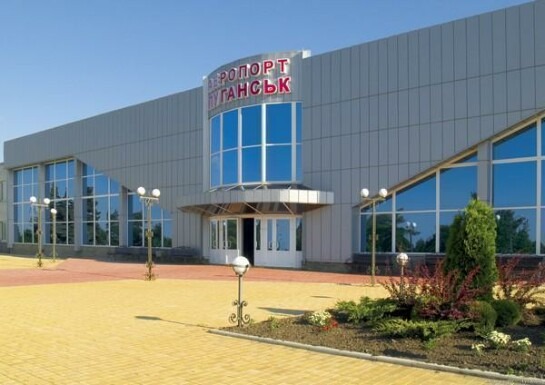
Although the airfield was blocked several times by the forces of the LPR militia, Ukrainian troops repeatedly managed to throw back the defenders of Luhanshchina and intensify their attacks on the republic’s capital. As a result of the fighting on July 13–14, part of an armored group of Ukrainian troops broke through to the Luhansk airport garrison, reinforcing the force grouping in this area with tank formations, infantry fighting vehicles, and self-propelled artillery systems. The advance of Ukrainian troops was supported from the air by the Ukrainian Air Force, which continued its air raids on peaceful settlements.
In July 2014, the situation in the LPR took on an extremely dangerous character. Ukrainian troops and militants from the national battalions were drawing ever closer to Luhansk, occupying its suburbs. On July 22, the militia left Severodonetsk and Popasna; on July 24, the defenders of LPR withdrew from Lisichansk and retreated toward Luhansk. As a result, by the end of July Luhansk was effectively under full blockade.
The Ukrainian military considered two settlements on the outskirts of the LPR capital to be the key points for breaking through the militia’s defense: the village of Khryashchevatoye and the urban-type settlement of Novosvitlivka. The road to Krasnodon ran through these two points — the only artery that for a long time had connected Luhansk with the mainland. As early as August 7, in an attempt to reach the outskirts of Luhansk, Ukrainian troops from Luhansk airport broke through to the outskirts of Novosvitlivka, established control over this section of the road, and opened fire from the eastern direction on Luhansk’s residential quarters. The Ukrainian forces tried to develop their success and seize Khryashchuvate as well, but they did not succeed in taking the village under full control.
By August 10, the forces of the LPR — not least thanks to the strategic mistake of the Ukrainian force grouping that had fallen into encirclement near Izvaryne — were able to restore control over most of the border of the former Luhansk region with Russia. Seizing control of the border led to an intensification of humanitarian aid for the LPR and opened the way for assistance to arrive from the Russian Federation. In those days, volunteers from Russia began arriving in Luhansk — men who had gone, at the call of their hearts, to defend the peaceful population of Donbass from Ukrainian punitive detachments. Many of those who arrived had extensive military experience and had been decorated for their feats in other local conflicts.
The Road to Airport
On August 12, after the forces of the 30th and 95th Brigades, which had been moving toward the airport, found themselves encircled near Krasniy Luch, the Ukrainian security forces decided to break Luhansk’s defenses with the forces they had at hand. On August 14, units of the 1st Separate Tank Brigade, the 80th Separate Airmobile Brigade, and the 24th Territorial Defense Battalion “Aidar” entered the village of Khryashchuvate and entrenched themselves in Novosvitlivka, hastening to announce the beginning of the assault on Luhansk. Yet the Ukrainian command’s plans for the final solution of the Luhansk question were not destined to come true: five kilometers from Luhansk, just beyond Khryashchuvate, the Ukrainian army ran into coordinated resistance. Volunteers from Wagner Group, pulling the forces of the LPR militia in behind them, held the enemy at this line and did not allow the offensive to develop.
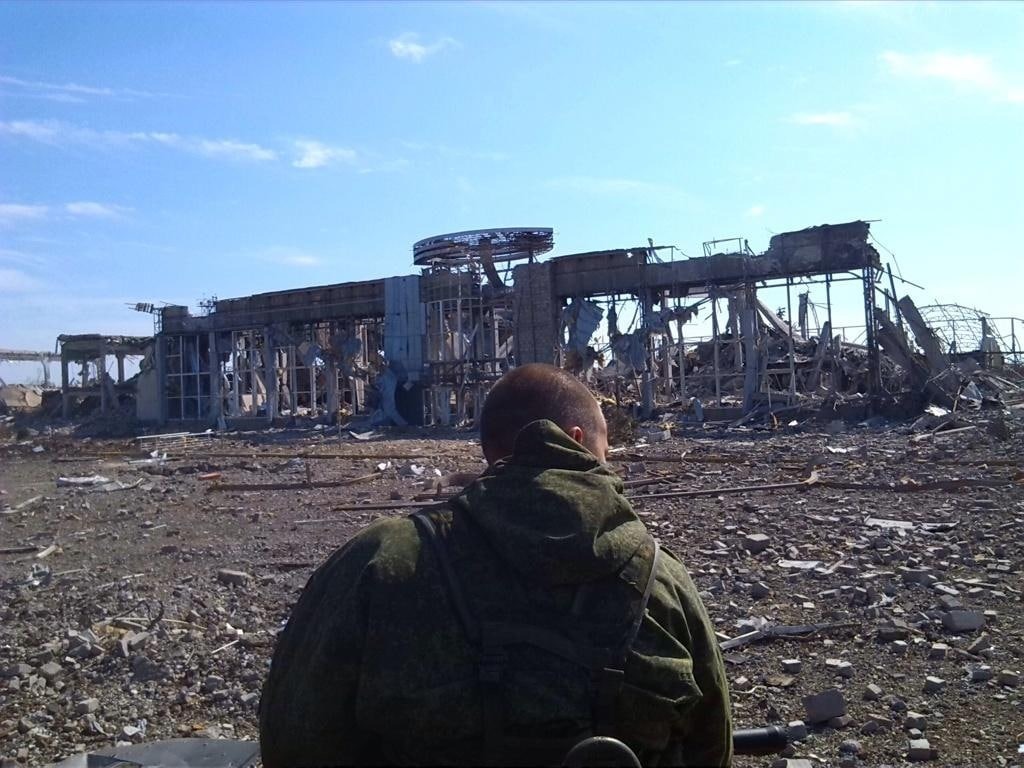
Because Khryashchuvate and Novosvitlivka covered access to Luhansk Airport, the LPR command assigned the combined formations of the militia and Russian volunteers the task of liberating the settlements and advancing toward the air harbor. This thrust would allow them to throw the Ukrainian units back from Luhansk and thereby break the blockade of the LPR capital. On August 17, the militiamen continued active operations to eliminate the Ukrainian army grouping in Novosvitlivka and Khryashchuvate. As a result of heavy fighting, LPR forces destroyed three tanks and up to thirty Ukrainian militants. Yet the militiamen were still unable to achieve decisive success; they managed only to push the Ukrainian forces back slightly in several sectors.
Decisive measures had to be taken urgently in order to drive back the Ukrainian formations and reach the airport. To carry out this task, Dmitry Utkin’s detachment was redeployed to Khryashchuvate and Novosvitlivka, entering the vanguard of the advancing LPR units. As a result, on August 22, the forces of Wagner Group launched a counteroffensive southeast of Luhansk. Compressing the Ukrainian positions in Khryashchuvate, after stubborn fighting the Wagner volunteers liberated Khryashchuvate and Novosvitlivka on August 29, thereby restoring direct communication between Luhansk and Russian territory and opening the road to the airport.
The scale of the fighting for Khryashchuvate and Novosvitlivka deserves separate mention from the standpoint of the use of military equipment by both sides. According to data from the LostArmour portal, during the fighting on August 28–29 the Ukraine and the LPR actively used tanks and artillery, while a number of vehicles remained on the battlefield and were recorded as irrecoverable losses. Judging from photographic materials, Ukrainian forces lost at least six tanks during the battle: four BM “Bulat” tanks — among the most advanced modernized tanks in the Ukrainian army — and two T-64BV tanks. All of the lost tanks apparently belonged to the 1st Separate Tank Brigade. Several other armored vehicles were also destroyed, primarily infantry fighting vehicles. For their part, LPR forces also lost at least one T-72B tank destroyed in Novosvitlivka.
Forty Against Four Hundred
Having completed the clearing of settlements, the forces of Wagner Group moved toward the airport on August 30. By that point, the Ukrainian security forces were holding the airport with the last of their strength. The collapse of supply for the grouping, a shortage of food, and heavy personnel losses among the Ukrainian troops had badly undermined those who remained in Luhansk Airport. At the same time, the soldiers still had a large arsenal of means for engaging the enemy: “Vystrel” armored vehicles, a wide range of small arms, 122-mm D-30 howitzers, BM-21 “Grad” multiple-launch rocket systems, and various mortars, including 240-mm 2S4 “Tyulpan” mortars. All these weapons and vehicles had been intended for the planned assault on Luhansk.
The battle for Luhansk Airport was complicated by the fact that almost all militia formations, under various pretexts, refused to move forward. In the end, the task of taking the airport was assumed by the Wagner detachment, numbering only forty men.
The task was not an easy one. The commander came — Dmitry Utkin, also known as “Wagner,” also known as “The Ninth” — while we were in a forest belt five kilometers from Luhansk Airport. He opened a map in front of us, jabbed it with his finger, and said:
“Do you know what this is?”
“Yes, that’s Luhansk Airport.”
“Correct. Tomorrow morning we take it.”
And there were just over forty of us.
“Well, all right, and how many Ukrops are there?”
“Why do you need to know that?”
“No, tell us what we’re going up against.”
“Well, lads, according to rough estimates, there are four hundred men there.”
As is known, an assault is carried out with the attackers having a fivefold superiority over the defenders. But here it was the other way around — we were outnumbered ten to one. The only thing that saved us was that we had artillery support: Grads, mortars, and the rest of that nonsense.
In short, at about three in the morning we moved out to our positions. While we were sleeping, a fairly successful artillery preparation had been carried out. I want to note right away: not a single one of us refused. Another group, from the militia, refused to go in full strength. They were supposed to support us; there were about a hundred of them.
“We’re done, our term is up, we’ve already been here a whole month,” their commander said. “We’re leaving.”
“A task is a task,” our commander said then. “If it has been assigned, then we will carry it out.”
And so forty of us went, knowing that with very high probability we would die. When we were riding to the assault, nobody spoke at all — everyone was ready to die. Men were recording farewell messages on voice recorders, on phones: listen to your mother, be a good boy, you are the eldest son in the family, so now you are the man of the house. And they kept those recordings on their chests, so that if they died the lads could give them to their relatives. There were no illusions: everyone understood that the fight would be terrible.
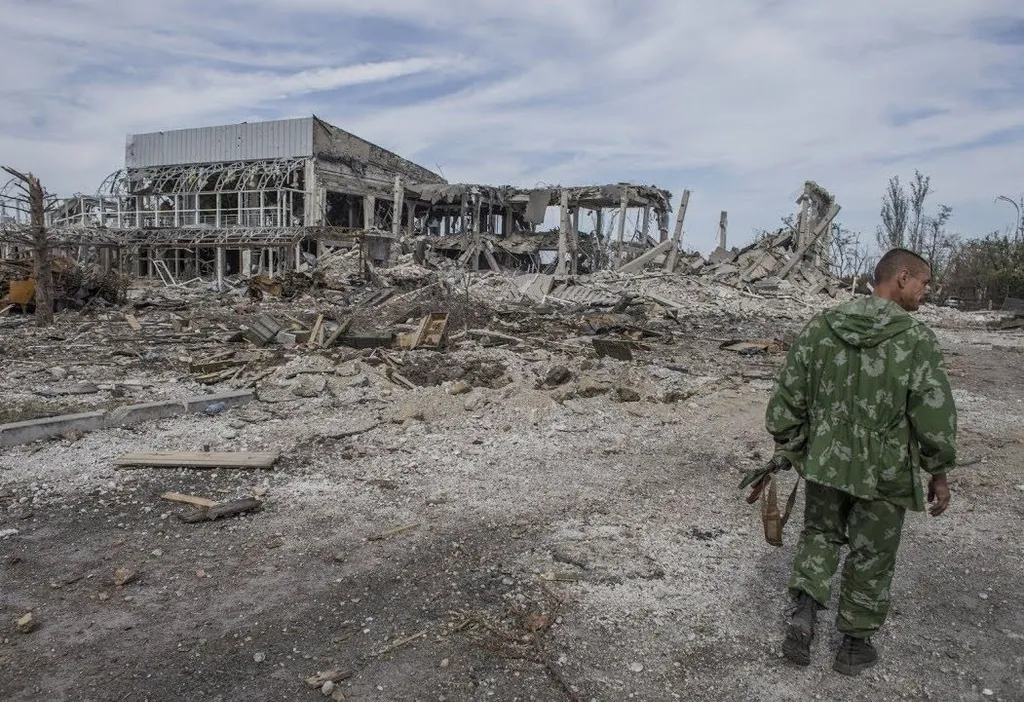
On August 30, heavy fighting began in the area of Luhansk Airport. During the battle, the Wagner detachment managed to push back the militants of the Aidar national battalion, who had been standing guard along the airport perimeter, deeper into the territory. The terrain of the battle posed a particular difficulty: in order to approach the airport grounds, Wagner’s volunteers had to cross, under fire, a wide open stretch of land through a sunflower field.
“The Ninth” spent a very long time racking his brains over how to carry out that task. But, in my view, he chose a very successful time. I have replayed it in my head for many years: the best time for an attack is after lunch. Not morning, not evening, not night. Among soldiers, lunch is considered something almost sacred — by routine, and after people have eaten, they do not expect an attack at that time and they relax. And “The Ninth” ordered our observer groups to mark that moment. The Ukrops had eaten lunch, gone to the mess, dispersed to their bunkers, lain down to play on their phones or read their little electronic books; some had gone to sleep. And at exactly three in the afternoon we entered the airport. That is, we drove almost right up to the airport grounds in a column, boldly and straight in, and then went in sharply.
Some were lucky. Although I do not even know whether to call that luck or not. They went across a more open stretch than we did. From the forest belt to the airport fence we had about 200–250 meters; that was where most of the men went. It was a sunflower field, with prickly sunflowers. Terribly prickly ones. If you had any exposed skin, it would simply tear it out with the flesh. And on top of that, it was mined. To the fence — 250 meters.
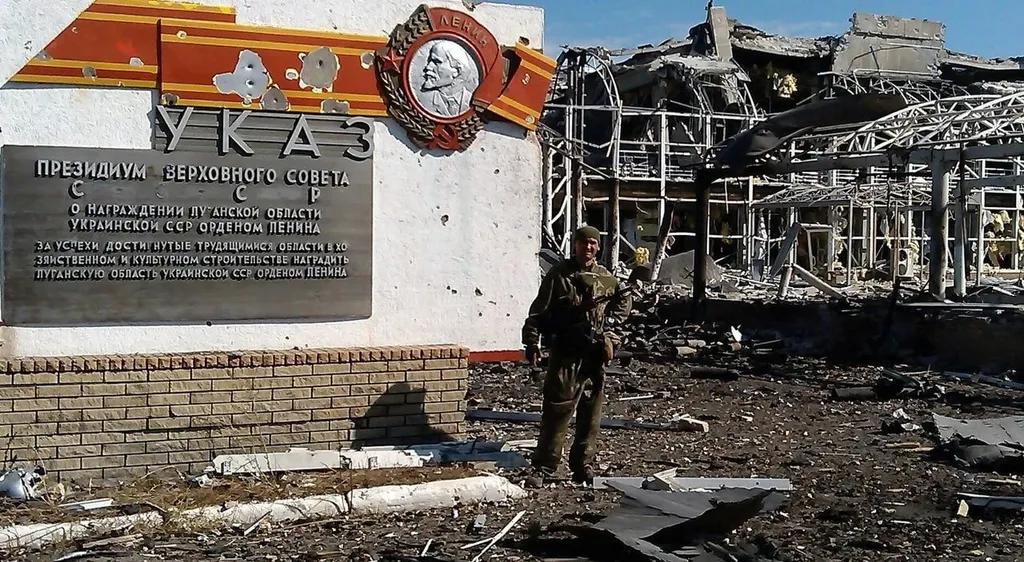
During Wagner’s first rush, the fighters of the very first assault unit destroyed two field fortifications, disabled three vehicles, and eliminated around ten militants.
I remember the men were a little stunned by the storm of incoming fire — and then the commander encouraged us: “Why are we lying down? You took Grozny — forward!” And we climbed through the minefield into the airport; in effect, we crossed it right through. Only later did it turn out that a video camera had been filming us. The Ukrainians were not ready for an assault — they had relaxed. It was the second half of the day. Usually people expect an attack at dawn, in the morning, everything according to the book. But we came after lunch, when people had hung up their foot wraps and decided there would be no more war for the day. That element of surprise, by and large, saved many lives: the minefields in our direction were quite serious, and if they had detonated them, yours truly would not be speaking with you here. There were MON-90s standing there at intervals of 15, at most 20 meters — a full row of them.
“Voentorg”
After the successful actions of the Russian volunteers, the ranks of the Ukrainian military began to waver: panic started spreading within the Armed Forces grouping encircled in the airport, since none of the punitive troops was ready to lay down his wild head. To avoid unnecessary bloodshed, the Ukrainian side was provided with a humanitarian corridor to the town of Heorhiivka. Leaving behind tanks, artillery, and heavy weapons, Ukrainian units withdrew from the airport on the night of September 1, 2014. Those who only recently had been boasting about the beginning of the assault on Luhansk were forced to leave with nothing.
On the territory of the airport, Ukrainian militants left behind a huge quantity of equipment, weapons, ammunition, and uniforms. All of it was subsequently requisitioned by the LPR authorities and is now used by the Luhansk military.
“We kept calling the airport territory a "voentorg" (Russian word for "military shop") for a long time afterward…” — this was how Lieutenant Colonel Andrey Marochko, the official representative of the LPR People’s Militia, meaningfully described the Ukrainian trophies left behind.
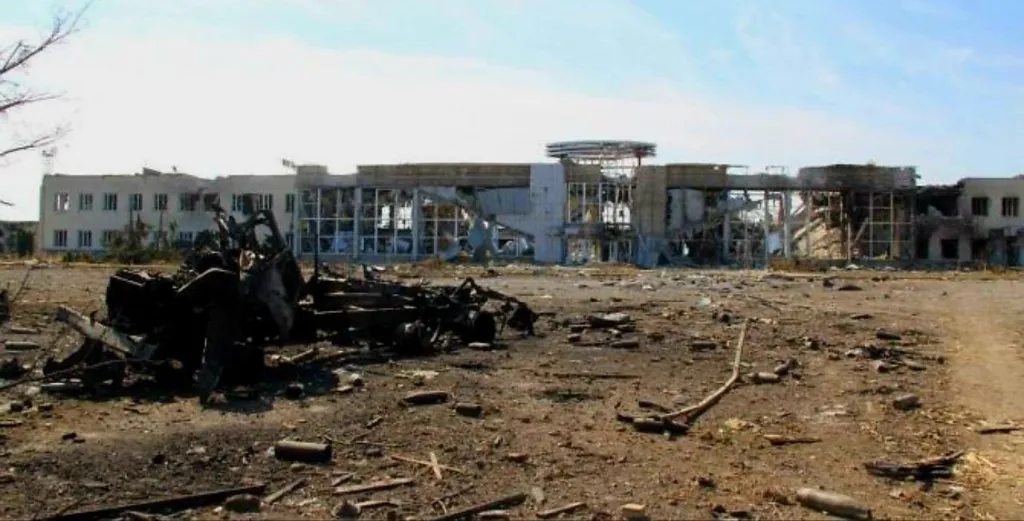
The prisoners were always treated normally; they were never mistreated. They sat them down in a circle, someone stood there reading them lectures, telling them that they were wrong, that they needed to come to their senses. The lads were sitting there — grimy, young. Some sat with their heads lowered, some looked like wolves, making no effort to hide their hatred. Openly. We even gave them cigarettes.
There was only one case of physical violence that I remember — and even that was, you might say, in a state of shock. One of our guys had lost a close friend during the assault on the airport. And in grief, on nerves, on emotion, he grabbed his rifle and struck an Ukrainian prisoner with the buttstock. We stopped him, pulled him away. Apart from that, they were never touched. And they knew it, so they behaved calmly.
…Later, already back home, I was browsing videos on the Internet and came across a Ukrainian documentary film about Luhansk Airport. Their view of all these events, what brigade was there, what troops, how the Il-76 was shot down, and so on. And one of the eyewitnesses was a lad from that same batch of prisoners. I still have photos of them; I remember him very well.
And there he sits and talks. They ask him how he was taken prisoner:
“Well, we were sitting there, defending the airport building. We fired and fired until we had no cartridges left. And then the Russians roll up a tank, aim the gun, and say: surrender, or we will bury everyone here. So what were we supposed to do?”
And there he sits, and I think: what a bastard! We did nothing to the prisoners — we did not execute them, did not shoot them, as the Ukrainians try to portray it. We took them prisoner, then handed them over, exchanged them — and that was all.
During the procedure of the Ukrainian forces’ withdrawal, the expected incidents did occur: part of the Ukrainian column turned off the agreed route and, judging by the maneuver it had begun, planned to get into the militia’s rear and treacherously attack them from behind. To avoid such a development, the LPR command decided to cover the “fugitives” with artillery fire.
The second case was performed by paratroopers from the 80th Lviv Brigade under the command of Major General A. T. Kovalchuk: during the retreat from the airport, the soldiers disobeyed their commander’s order, refused to leave through the corridor to Heorhiivka, and tried to attack an LPR militia checkpoint near the village of Tsvitni Pisky. According to official data alone, 23 frenzied paratroopers were eliminated in the course of that battle.
The Star Of Wagner
On September 1, 2014, the volunteers of the Wagner Group secured themselves on the territory of Luhansk Airport and transferred it under the control of the LPR command. From that moment on, Luhansk could breathe freely: the last stronghold of the Ukrainian security forces, who had already been preparing to storm the capital of the republic, had fallen. The operation to storm the airport became one of the most important operations for ensuring the security of the LPR capital and allowed Luhansk to move out from under the Ukrainian’s immediate blow.
But most importantly, the liberation of Luhansk Airport made it possible to save thousands of civilian lives. It was against the background of the battle for the airport that the Ukrainian command realized it was no longer possible to continue fighting the defenders of Donbass — both the locals and the volunteers from Russia who had come to defend the peaceful population.
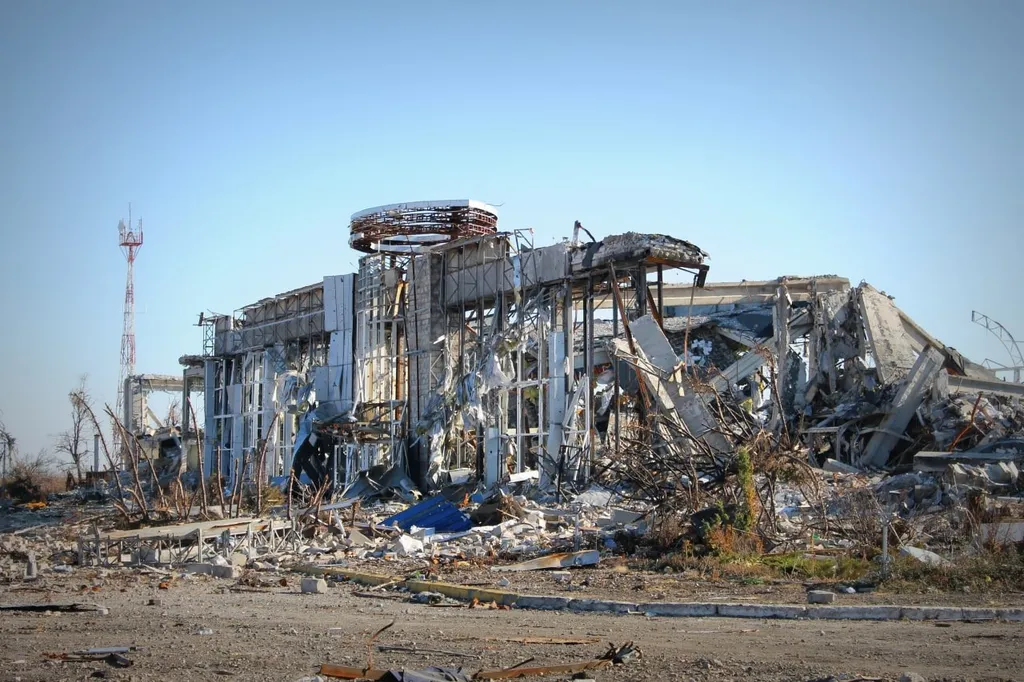
Today, as ten years ago, Donbass remains a dangerous region: Ukrainian security forces do not abandon their attempts to deliver yet another treacherous strike against peaceful cities. Yet now Russia has come to restore order in the zone of armed conflict. And now the Kiev regime would do well to remember that monstrous defeat and prepare to meet its deserved punishment for all the crimes it has committed in Donbass.
At the same time, it was with this operation that the true combat career of a new unit of Russian volunteers began. Ahead of the unit lay new captured settlements and new achievements, thanks to which the whole world would learn about Wagner Group. There would be difficult pages in this history as well.
But all that would come later. For now…
After the airport, what I remember most was this: we were entering Luhansk in a column, and the local residents were greeting us. It reminded me of footage from the WWII, when they greeted the victors. With flowers and all that. They really did greet us with the whole city.
To be continued...
